

PARADISE FARM · HOPE BAY, PORTLAND
01 / CURRENT REQUIREMENT
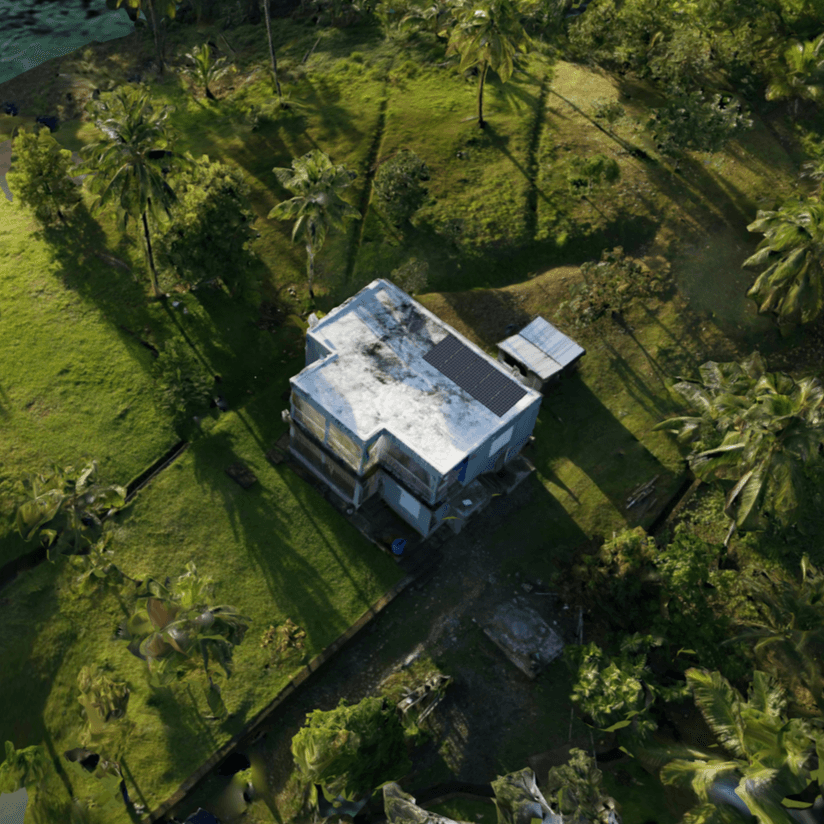
Ludlow is not being designed around the maximum amount of solar that can fit on the property. Phase I begins with the farm’s current operating requirement and the electrical infrastructure already in place.
5 × 585 W
2.925 kWdc
SOLAR ONLY
≈ 3,934 kWh/year modeled
The first objective is practical: put the existing hybrid inverter to work, establish solar generation and reduce electricity purchased from the grid without forcing the farm to build the maximum system on day one.
THE SITE CAN SUPPORT MORE.
THE FARM DOESN’T NEED TO BUY IT YET.
02 / WHEN THE FARM PRODUCES MORE
A working farm does not have a fixed energy requirement. New equipment creates new electrical demand. Productive equipment can also create new economic capacity.
HARVEST → PROCESS → PACKAGE → REFRIGERATE → SELL
A coconut growing on the farm requires little electricity. Turning it into a processed, packaged and refrigerated product changes the energy equation. Processing machinery and refrigeration introduce loads that are not represented by the farm’s present consumption.
WHAT DOES THE ADDITIONAL ENERGY ALLOW THE FARM TO PRODUCE?
P01 / COCONUT PROCESSING
03 / GROWTH IN PHASES
PHASE I
5 MODULES
2.925 kWdc
Solar only
≈3,934 kWh/year modeled
Current operating requirement.
PHASE II
PRELIMINARY
8 MODULES
4.68 kWdc
+ Battery storage
≈4,320–5,400 kWh/year preliminary
Increased productive demand + energy continuity.

SITE CAPACITY
16 MODULES
9.36 kWdc
Maximum-production study
≈13,818 kWh/year modeled
Modeled future production ceiling.

CURRENT CONSUMPTION → PRODUCTIVE GROWTH → PROVEN FUTURE DEMAND
04 / ENERGY COST × PRODUCTIVITY
If a kilowatt-hour of solar energy replaces electricity purchased from the utility, its immediate value can be measured as avoided energy cost. If that same energy supports processing, refrigeration or another productive activity, it also becomes an input to an operating process.
ENERGY → CAPABILITY → PRODUCTIVITY → VALUE
COCONUT PROCESSING — WORKED EXAMPLE
Machine model — TO BE VERIFIED
Rated input — TBD kW
Throughput — TBD coconuts/hour
Production run — TBD hours
Energy/run — TBD kWh
Grid energy cost — TBD J$/run
Productive output — TBD units/run
Technical example pending verified manufacturer specifications. No savings values shown until inputs are controlled.
P02 / PROCESSING EQUIPMENT
05 / FROM MODEL TO FIELD
Ludlow engineering includes site modeling, solar-access analysis, electrical architecture, conductor and protection design, DC isolation, backup distribution, equipment placement, grounding and bonding, routing, balance-of-system planning, installation methodology and field-verification requirements.
REQUIREMENTS → ENGINEERING → EQUIPMENT → EXECUTION → VERIFICATION
FEWER DECISIONS LEFT FOR INSTALLATION DAY.
P03 / SITE MODEL + ORTHOMOSAIC
P04 / ENGINEERING + FIELD DETAIL
06 / PROJECT THESIS
IT’S WHAT THE NEXT KILOWATT-HOUR CAN DO.
Phase I addresses the farm that exists today. Phase II preserves a path for increased productive demand and stored energy. The 16-module study establishes the site’s modeled production ceiling for future growth.
BUILD FOR THE REQUIREMENT.
MEASURE THE RESULT.
EXPAND WHEN PRODUCTIVITY JUSTIFIES IT.
WATTS UP JM
QUALITY BY DESIGN